


Before you start
4x4 blindfolded is solved the same way as 3x3: you look at the cube, memorise the letters, put on the blindfold and solve from memory. The time runs from the first look at the cube until you stop the timer. At WCA competitions you get three attempts and the best one counts (9b6). The cube may not have a logo or any markings (3l) - the one in this course does not have one either.
What you need to know
- how to solve the 3x3 cube blindfolded with the Old Pochmann method - letters, the buffer, setup moves and undoing them are described in the 3x3 blindfolded course,
- how to read 4x4 notation: 2R is only the second layer from the right (without the outer one), 2U - the second from the top, Uw - the two top layers together. The notation is described in the 4x4 course.
What is new in 4x4
- Three kinds of pieces. 24 centres (4 of each colour), 24 wings (halves of edges) and 8 corners. You trace and solve each kind separately.
- There are no fixed centres. In 3x3 the centres show which face is which. In 4x4 you choose the cube orientation yourself based on one corner (stage 1).
- Centres of the same colour are identical. It does not matter which white centre ends up in which white position.
- Wings do not flip. A wing in a given position always sits the same way round, so every position has a single letter and there are no flipped pieces.
- More letters. On average about 20 centre letters, 24 wing letters and 7 corner letters - about 50 in total, and the whole solve is about 500 moves.
The method
The course teaches the set most people start with: U2 for the centres, r2 for the wings (in our notation 2R2) and Old Pochmann for the corners - exactly as in the 3x3 course. In the U2 and r2 methods each letter is a setup move, one fixed move (U2 or 2R2) and undoing the setup. There are a lot of moves, but you hardly have to think while solving. All setups and algorithms in the course are verified with a cube engine, and the whole method - on 3000 random scrambles.
The world record is 51.96 s, and the Polish record is 1:31.39 (as of October 2026). At the beginning 30-60 minutes per solve is a normal time.
1Cube orientation and letters
Goal: you know how to hold the cube and know the letters of all three kinds of pieces.
How to hold the cube
Find the white-green-red corner and rotate the whole cube so that it is at the front right on top, with the white sticker facing up, green to the front, red to the right. You hold the cube like this for the whole memorisation and solve. From now on the top face is “white”, the front “green”, the right “red”, the left “orange”, the back “blue” and the bottom “yellow” - even if the centres on them currently have other colours.
This corner is already in its place, so it never appears in the letters (C, J, M). You can always orient the cube this way, because any orientation is fine as long as you stick to it until the end.
Letters
The letters are the same as in the 3x3 course: faces U, L, F, R, B, D in order, four letters on each one going clockwise. A letter denotes a position in the solved cube.
- Corners - exactly as in 3x3 (buffer A).
- Centres - the four centres of a face, starting from the top left (buffer B = U, back right).
- Wings - on each edge of a face, the half that comes first going clockwise: on the top edge the left one, on the right edge the top one, on the bottom edge the right one, on the left edge the bottom one. Thanks to this, the left UB wing is A, just like the UB edge in 3x3 (buffer K = F, bottom edge on the right).
Practise the letters - you can rotate the cube by dragging it:
2Centres: tracing
Goal: you write down the centre letters of a scrambled cube.
The centre buffer is B (top face, back right). You trace by colours, because centres of one colour are identical:
- Look at the colour of the centre in the buffer. This colour has to go to its own face.
- On that face choose the first position in alphabetical order that has a different colour. That is your letter. You send the centre from the buffer to that position, and the centre from that position goes to the buffer.
- Look at the colour now in the buffer and repeat.
- Positions a centre has already been sent to are solved - treat them as correct for the following letters.
- White in the buffer: on top choose D first, then A, then C (D needs no setup, A and C have separate algorithms).
- Cycle break: if there is white in the buffer and the whole top is already white, choose the first position in alphabetical order (on any face) that has a wrong colour, and send white there. The wrong colour comes to the buffer and you continue tracing.
- The end: there is white in the buffer and all positions have the correct colours.
Example
Scramble the cube with white on top and green in front: B2 Uw Bw2 Dw2 Uw2 F Rw' L2 B' D2 U2 Bw2 R' B U L2 Dw2 B' U2 B R2 D Uw' B' D' B2 U2 Bw2 L' D. The white-green-red corner is already at the front right, so you do not need to rotate the cube.
- There is yellow in buffer B. On the yellow (bottom) face the first position with a wrong colour is U (it has blue).
- Blue comes to the buffer. On the blue face the first wrong position is Q (red).
- Red: on the red face the first wrong position is M (orange).
- Orange: E (white).
- White: on top D comes first - it has green, so D.
The full centre trace of this cube: UQ ME DI RV NJ FO KX AS GL PL (20 letters). The L in the GL pair is a cycle break: there was white in the buffer and the whole top was already white, so white went to the first wrong position - L.
3Centres: execution
Goal: for each centre letter you perform the setup, U2 and the undo of the setup.
The U2 move swaps the centre in buffer B with the centre in position D (front left on top). The setup moves the centre from your letter exactly to D - then U2 swaps it with the buffer. Afterwards you undo the setup, just like in Old Pochmann.
U2 also turns the whole top layer, so after one letter the top edges and corners are moved. Do not worry about it: after two letters they return to their places, and with an odd number of centre letters you do one more U2 at the end - this is the centre parity.
| Letter | Position | Setup | Undo | |
|---|---|---|---|---|
| A | Ubl | separate algorithm: U2 2F' L' 2B' U 2F U' 2B U 2F' U' L 2F | ||
| C | Ufr | separate algorithm: U2 2L F 2R U' 2L' U 2R' U' 2L U F' 2L' | ||
| D | Ufl | - (U2 straight away) | - | |
| E | Lub | 2F 2U2 2F' | 2F 2U2 2F' | |
| F | Luf | 2L' 2U 2L | 2L' 2U' 2L | |
| G | Ldf | 2D 2F' 2D' 2F | 2F' 2D 2F 2D' | |
| H | Ldb | 2L 2D 2L' | 2L 2D' 2L' | |
| I | Ful | 2F 2U' 2F' | 2F 2U 2F' | |
| J | Fur | 2L' 2U2 2L | 2L' 2U2 2L | |
| K | Fdr | 2F' 2D' 2F | 2F' 2D 2F | |
| L | Fdl | 2D 2L 2D' 2L' | 2L 2D 2L' 2D' | |
| M | Ruf | 2U 2F 2U' 2F' | 2F 2U 2F' 2U' | |
| N | Rub | 2L' 2U' 2L | 2L' 2U 2L | |
| O | Rdb | 2F' 2D2 2F | 2F' 2D2 2F | |
| P | Rdf | 2L 2D' 2L' | 2L 2D 2L' | |
| Q | Bur | 2F 2U 2F' | 2F 2U' 2F' | |
| R | Bul | 2U 2L' 2U' 2L | 2L' 2U 2L 2U' | |
| S | Bdl | 2F' 2D 2F | 2F' 2D' 2F | |
| T | Bdr | 2L 2D2 2L' | 2L 2D2 2L' | |
| U | Dfl | 2L B 2D2 B' 2L' | 2L B 2D2 B' 2L' | |
| V | Dfr | D' 2L B 2D2 B' 2L' | 2L B 2D2 B' 2L' D | |
| W | Dbr | D2 2L B 2D2 B' 2L' | 2L B 2D2 B' 2L' D2 | |
| X | Dbl | D 2L B 2D2 B' 2L' | 2L B 2D2 B' 2L' D' | |
You do not need to cram the table - the setups come in a few recurring forms:
- on the L, F, R, B faces almost every setup is three moves: 2F or 2L, then 2U or 2D, then undoing the first move (e.g. I: 2F 2U' 2F'),
- four centres (G, L, M, R) need four moves,
- you first turn the bottom-face centres into position U with a D move, and then always 2L B 2D2 B' 2L'.
A and C - they swap with every letter
Since every U2 also swaps centres A and C, after an odd number of executed letters the centre that was on A lies on C - and vice versa. You write down the letters as they came out of the trace, and when executing you apply the rule:
If the number of centre letters executed so far is odd, perform the algorithm for C instead of A, and for A instead of C.
The same rule exists in the M2 method for 3x3 edges. There is no short setup for A and C, so they have separate algorithms (13 moves, one is the mirror of the other) - they are in the table. They come up on average 1-2 times per cube.
Example: the first two letters
4Wings: tracing
Goal: you write down the wing letters of a scrambled cube.
You trace wings like edges in 3x3, only more simply, because they do not flip. The buffer is K - the wing at the bottom of the front face, on the right (the DF edge, right half).
- Look at the wing in the buffer and find its position in the solved cube: it is the half of the edge with the same two colours, lying the same way (left or right, top or bottom). The letter of that position is your letter.
- The wing from that position comes to the buffer. Repeat.
- Cycle break: when the buffer's own wing comes back to the buffer and not everything is in place, choose the first unsolved position in alphabetical order (other than K).
How do you recognise which half? Each edge has two wings with the same colours, but they are mirror images - one cannot be placed in the position of the other. Imagine the buffer wing moved to its edge so that both colours match the faces: then you can see straight away whether it goes to the left or the right half. For example, the white-green wing fits on the UF edge either on the right (letter C) or on the left (letter I) - depending on how its colours lie.
Example
In the example cube, buffer K holds the wing from position V, position V holds the wing from position B, position B - the one from position C… The full trace: VB CG XJ TE RI WN DF OU AH QP MS H (23 letters; the H in the AH pair is a cycle break). An odd number of letters means wing parity (stage 5).
5Wings: execution
Goal: for each wing letter you perform the setup, 2R2 and the undo of the setup.
The 2R2 move (in method descriptions: “r2”) swaps the wing in buffer K with wing Q (top edge of the back face, on the right). The setup moves the wing from your letter to Q, then 2R2 and the undo.
| Letter | Position | Setup | Undo | |
|---|---|---|---|---|
| A | UBl | U B' R U' B | B' U R' B U' | |
| B | URb | B' R B | B' R' B | |
| C | UFr | separate algorithm: 2R2 U B R B' 2R' B R' B' 2R U' | ||
| D | ULf | B L' B' | B L B' | |
| E | LUb | L U' L' U | U' L U L' | |
| F | LFu | U' L' U | U' L U | |
| G | LDf | U' L2 U | U' L2 U | |
| H | LBd | U' L U | U' L' U | |
| I | FUl | U 2F2 L2 2F2 U' | U 2F2 L2 2F2 U' | |
| J | FRu | B' R2 B | B' R2 B | |
| L | FLd | B L2 B' | B L2 B' | |
| M | RUf | R U R' U' | U R U' R' | |
| N | RBu | U R' U' | U R U' | |
| O | RDb | U R2 U' | U R2 U' | |
| P | RFd | U R U' | U R' U' | |
| Q | BUr | - (2R2 straight away) | - | |
| R | BLu | L B L' B' | B L B' L' | |
| S | BDl | B 2U2 R2 2U2 B' | B 2U2 R2 2U2 B' | |
| T | BRd | R B' R' B | B' R B R' | |
| U | DFl | separate algorithm: U 2R2 U' 2R D2 2R' U 2R D2 2R U' 2R2 | ||
| V | DRf | B' R' B | B' R B | |
| W | DBr | separate algorithm: U D R2 D' 2R D R2 D' 2R' U' 2R2 | ||
| X | DLb | B L B' | B L' B' | |
Rules that help you remember the setups:
- B, D, J, L, V, X: a B-face move, then R or L, then undoing B (e.g. B: B' R B),
- F, G, H, N, O, P: a U move, then L or R, then undoing U (e.g. H: U' L U),
- E, M, R, T: four moves, A, I, S: five moves,
- Q: 2R2 straight away; C, W and U (the buffer's partner): separate algorithms.
C and W - they swap with every letter
Every 2R2 also swaps wings C and W. The rule is the same as for centres A and C:
If the number of wing letters executed so far is odd, perform the algorithm for W instead of C, and for C instead of W.
The centre columns of the 2R layer also swap with every letter. After an even number of letters they return to their places.
Wing parity
When there is an odd number of wing letters, after the last letter wings C and W are left swapped and the centres in the 2R layer are moved. One algorithm fixes this:
2R' D2 2L' 2R2 B2 U2 2L U2 2R' U2 2R U2 F2 2R F2 2L' B2 2R2 2L D2 2R'
6Corners
Goal: you solve the corners just like in 3x3 and know what changes in 4x4.
You trace and solve the corners exactly as in the 3x3 course: buffer A, the modified Y-perm R U' R' U' R U R' F' R U R' U' R' F R swaps the buffer with position P, and the setups are the same. There are two differences:
- the white-green-red corner (C, J, M) is always in place, because you orient the cube by it - 7 corners remain,
- in 4x4 parity is separate for the corners. In 3x3 the Ra-perm came after the edges; here, with an odd number of corner letters, you do an algorithm after the corners.
| Letter | Sticker | Setup | Undo | |
|---|---|---|---|---|
| B | UBR | R D' | D R' | |
| C | UFR | F | F' | |
| D | UFL | F R' | R F' | |
| F | LUF | F2 | F2 | |
| G | LDF | D2 R | R' D2 | |
| H | LDB | D2 | D2 | |
| I | FUL | F' D | D' F | |
| J | FUR | R2 D' | D R2 | |
| K | FDR | F D | D' F' | |
| L | FDL | D | D' | |
| M | RUF | R' | R | |
| N | RUB | R2 | R2 | |
| O | RDB | R | R' | |
| P | RDF | - (Y-perm straight away) | - | |
| Q | BUR | R' F | F' R | |
| S | BDL | D' R | R' D | |
| T | BDR | D' | D | |
| U | DFL | F' | F | |
| V | DFR | D' F' | F D | |
| W | DBR | D2 F' | F D2 | |
| X | DBL | D F' | F D' |
Corner parity
Each Y-perm also swaps two top edges (UL and UB - two wings each). After an even number of letters they return to their places, after an odd number they stay swapped. In that case, perform at the end:
B U' B' 2R2 U2 2R2 Uw2 2R2 Uw2 U2 B U B'
In the example cube the corner letters are DK HG DO W - 7 letters, so there will be corner parity at the end. The first D and the O are cycle breaks (at the start the buffer holds its own, twisted corner).
7Memorisation
Goal: about 50 letters that you remember reliably throughout the whole solve.
In 3x3 a short story or letters repeated in your head were enough. In 4x4 there are three times as many letters, and you solve the centres at the very beginning, a dozen or so minutes after memorising. That is why it is worth:
- turning letter pairs into images - as in stage 8 of the 3x3 course, ideally with a fixed list of images for the pairs,
- placing the images along a route (a memory palace): two images at each point, first the centres, then the wings. How to do it is described in stage 4 of the Multi-Blind course,
- memorising the corners last as plain letters, repeated in your head - there are only a few of them, and you solve them at the end,
- remembering whether the number of letters is odd: a single letter at the end of the centres or wings will remind you about parity.
Memorise in the same order in which you solve: centres, wings, corners. Before putting on the blindfold, go through everything in your head once more.
8Your first blindfolded solve
Goal: your first successful 4x4 solve with your eyes covered.
Learn bit by bit, just like in 3x3:
- With your eyes open, one part at a time. In the simulator below choose only centres, only wings or only corners. Trace the letters, write them down and execute them while looking at the cube.
- From memory, but looking. The whole cube: memorise all the letters and execute from memory.
- Blindfolded. First one part at a time, then the whole thing.
The whole solve looks like this:
- Orient the cube: the white-green-red corner at the front right on top, white up. Start the timer.
- Trace and memorise the centres, wings and corners. Count which parts have an odd number of letters.
- Put on the blindfold.
- Centres: for each letter setup, U2, undo. Mind the A/C rule. With an odd number of letters - U2 at the end.
- Wings: setup, 2R2, undo. Mind the C/W rule. With an odd number of letters - wing parity.
- Corners: setup, modified Y-perm, undo. With an odd number of letters - corner parity.
- Stop the timer and take off the blindfold.
During the centres and wings the cube looks more scrambled than at the start - that is normal, because U2 and 2R2 move other pieces along the way. Everything returns to its place only at the end of each part.
Tracing practice
A random scramble, already oriented by the corner. Trace the letters and type them in - the trainer will execute them with the course method and check whether each part is solved. It is the result that counts, so any correct trace will pass, including one with a different choice at a cycle break.
Cheat sheet
The most important rules on a single page, with the setup tables.
Printable cheat sheet (A4 / PDF)
- Orientation - white-green-red corner at the front right on top, white up.
- Centres - buffer B, the colour from the buffer goes to the first wrong position of its own face; white: D, A, C. Setup, U2, undo. After an odd number of letters A ↔ C. Odd number of letters: U2 at the end.
- Wings - buffer K. Setup, 2R2, undo. After an odd number of letters C ↔ W. Odd number of letters: wing parity.
- Corners - as in 3x3 (buffer A, modified Y). Odd number of letters: corner parity after the corners.
- Order - centres, wings, corners; parity always after its own part.
Solve it yourself blindfolded
The clock starts from the scramble, as at a competition. The cube is already oriented by the white-green-red corner. When you have memorised the letters, click “Cover eyes” - the cube turns grey and you solve from memory with the buttons or the keyboard (inner layers, e.g. 2R, are only on the buttons). “Uncover and check” will show the result. You can practise centres, wings and corners separately.
Drag a sticker with your finger or mouse to turn a layer, or drag outside the cube to rotate the view. Keyboard: R, L, U, D, F, B, with Shift for the opposite direction; X, Y, Z rotate the whole cube.
Common problems
After the centres the top is turned by half a turn
There was an odd number of centre letters and the U2 parity was missing at the end - or the letters were counted wrongly.
Two centres on top have the wrong colour
Most often this is the skipped A/C rule: the letter A or C came after an odd number of earlier letters, and the algorithm for the same letter was performed instead of the one for the other letter.
After the wings the centres in the columns are mixed up
The centre columns of the 2R layer return to their places after an even number of wing letters. If they are moved, there was an odd number of letters and the wing parity was missing - or one of the letters was skipped.
Two wings are swapped
Check C and W: it is usually the C/W rule or the wing parity. If other wings are swapped, compare your letters with the tracing trainer - most often it is a confused half of an edge (left with right).
The UL and UB edges are swapped
The corner parity was missing - there was an odd number of corner letters.
I do not know how to hold the cube because the centres have moved
You orient the cube by the white-green-red corner, not by the centres. The colours of the centres do not matter for orientation - after solving they will end up where they belong by themselves.
Something skipped or a layer locked up
On 4x4 an unfinished layer turn is more likely than on 3x3. Turn calmly and all the way, especially the inner layers, and use a cube that does not skip.
What next?
Once U2 and r2 work reliably, you can speed up just like in 3x3: first the memorisation (fixed images for letter pairs, a memory palace), then the execution. Faster solvers solve the centres and wings with commutators - each algorithm places two pieces at once, so there are several times fewer moves.
The next event is 5x5 blindfolded: midges (like the 3x3 edges) and a second kind of centres are added, but the rules of tracing and execution stay the same.
Useful for 4x4 blindfolded
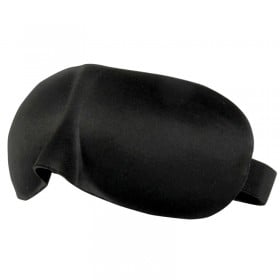
A blindfold you cannot see anything through, and a 4x4 cube that turns lightly and does not skip - with about 500 moves done with your eyes covered, every locked layer risks a DNF.


Other courses
- 2x2x2 Cube How to Solve a 2x2 Cube - Step-by-Step Course The simplest way to solve the 2x2 cube: white layer, yellow face and corners into place. 3 algorithms are enough - you know two of them from the 3x3 course. Go to the course
- 3x3x3 Cube How to Solve a Rubik's Cube 3x3 - Step-by-Step Course The layer-by-layer method from scratch: daisy, white cross, the first two layers and the last layer. Every move on an animated cube. Go to the course
- 4x4x4 Cube How to Solve a 4x4 Cube - Step-by-Step Course The 4x4 cube with the reduction method: you solve the centres and pair up the edges, then finish it like a 3x3. Plus 4 new algorithms, including two parities. Go to the course
- 5x5x5 Cube How to Solve a 5x5 Cube - Step-by-Step Course The 5x5 cube with the reduction method: you solve the centres and pair up the edges, then finish it like a 3x3. The face colours are set by the centres, and at most one parity awaits you at the end. Go to the course
- 6x6x6 Cube How to Solve a 6x6 Cube - Step-by-Step Course The 6x6 cube with the reduction method for those who already know the 4x4 and 5x5: four kinds of centre pieces, edges made of four wings, and parities. We focus on what is new. Go to the course
- 7x7x7 Cube How to Solve a 7x7 Cube - Step-by-Step Course The 7x7 cube with the reduction method for those who already know the 5x5: six types of centre pieces, edges made of five pieces and two edge parities. At the end, rules for the 9x9 and bigger. Go to the course
- Pyraminx How to Solve a Pyraminx - Step-by-Step Course The pyramid in 4 stages: tips, centres, bottom layer and the last three edges. 3 short algorithms are enough - it is the easiest puzzle of the whole family. Go to the course
- Megaminx How to Solve a Megaminx - Step-by-Step Course A dodecahedron with 12 faces is solved like a 3x3 cube, it just takes longer: layer by layer, with the same algorithms. The course guides you through every step, including the middle belt, where most people get lost. Go to the course
- Skewb How to Solve a Skewb - Step-by-Step Course The cube that turns along its diagonals: the white face from an insertion table, then the bottom corners and the centres. Four short algorithms. Go to the course
- Square-1 How to Solve a Square-1 - Step-by-Step Course A puzzle that changes shape. First you will learn to bring it back to a cube shape (with clear rules instead of guessing), and then solve the colours layer by layer - parity included. Go to the course
- FTO How to Solve the FTO - Step-by-Step Course An octahedron that becomes an official WCA event in 2027. Edges first, then corners, triangles at the end - six short algorithms. Go to the course
- Clock How to Solve a Clock - Step-by-Step Course A puzzle with 18 clocks, 4 pins and 4 wheels. There are no algorithms to memorise here - three rules are enough, and the whole solve takes a dozen or so moves. Go to the course
- 3x3x3 One-Handed How to Solve a 3x3 Cube One-Handed - Step-by-Step Course What the One-Handed event is about, which hand to use, how to hold the cube, which moves to replace and how to practise. A timer with inspection and average of 5. Go to the course
- 3x3x3 Fewest Moves How to Solve a 3x3 Cube in the Fewest Moves - Step-by-Step Course Solve the cube in as few moves as possible: WCA rules, move counting, blocks, skeleton, insertions and inverse scramble. Solution checking just like a judge. Go to the course
- 3x3x3 Blindfolded How to Solve a Rubik's Cube 3x3 Blindfolded - Step-by-Step Course Solve the cube with your eyes covered using Old Pochmann: letters on the stickers, tracing edges and corners, 3 algorithms and memorisation practice. Go to the course
- 3x3x3 Multi-Blind How to Solve Multiple 3x3 Cubes Blindfolded - Step-by-Step Multi-Blind Course Several cubes memorised at once and solved blindfolded: WCA rules, points, how many cubes to declare, memory palace and a timed attempt. Go to the course
- 5x5x5 Blindfolded How to Solve a 5x5 Cube Blindfolded - Step-by-Step Course For those who already solve 4x4 blindfolded: x-centres and t-centres with U2, corners, wings with r2 and midges with M2. Tables with animations and a trainer. Go to the course